MNIST Digit Recognition CNN
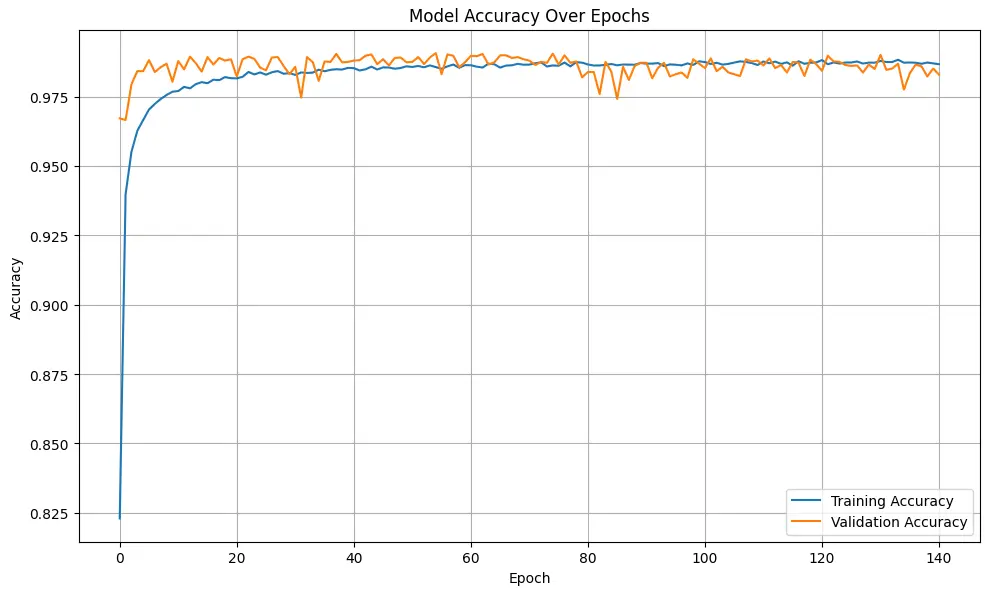
Experiment 4 Training Accuracy vs Epochs
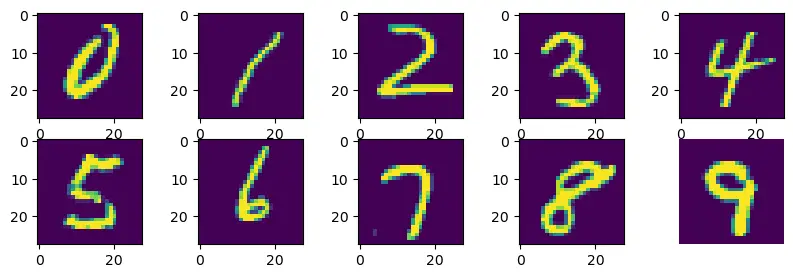
Mnist Digits Random Samples

Data Augmentation with Random Rotations
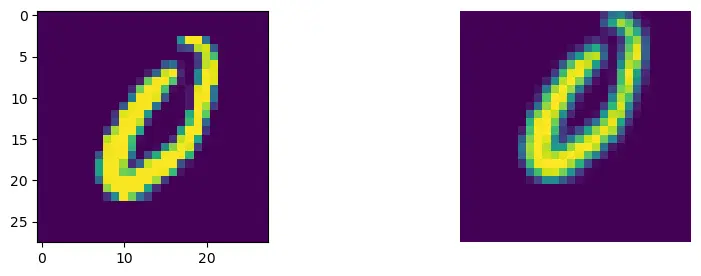
Data Augmentation with Random Translations
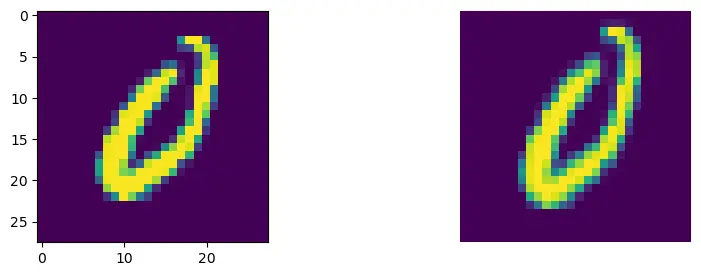
Data Augmentation with Random Zooms
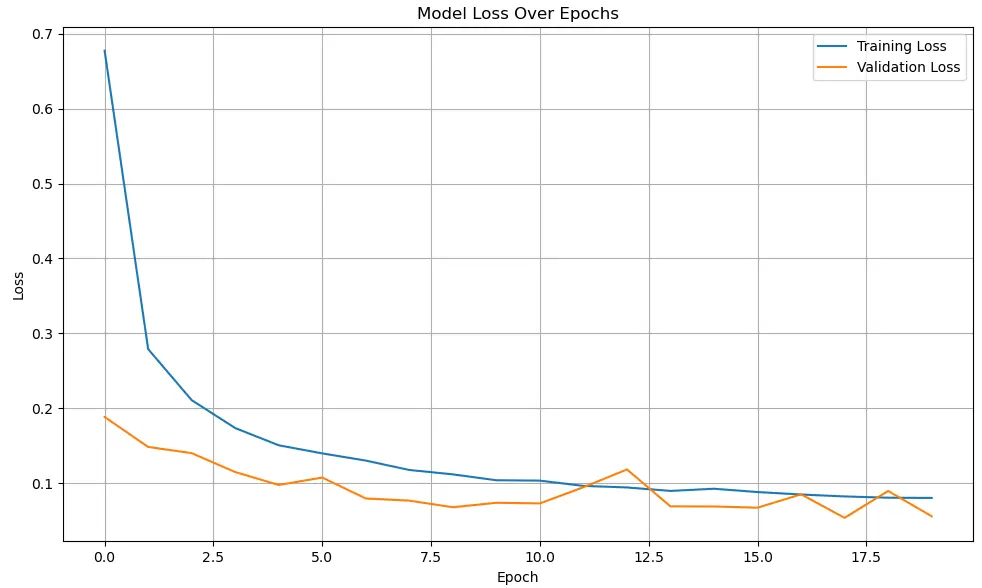
Experiment 1 Training Loss vs Epochs
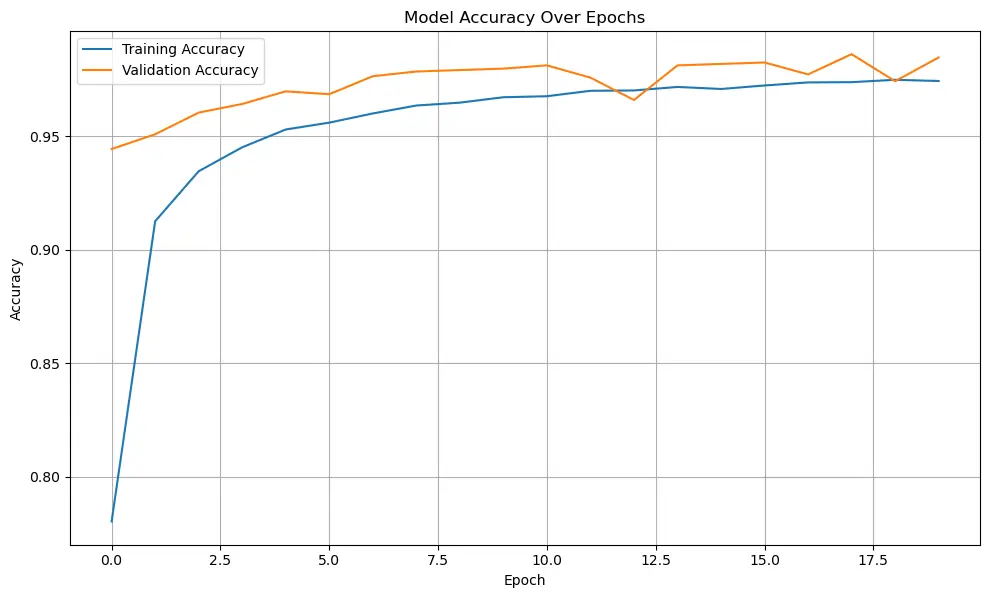
Experiment 1 Training Accuracy vs Epochs
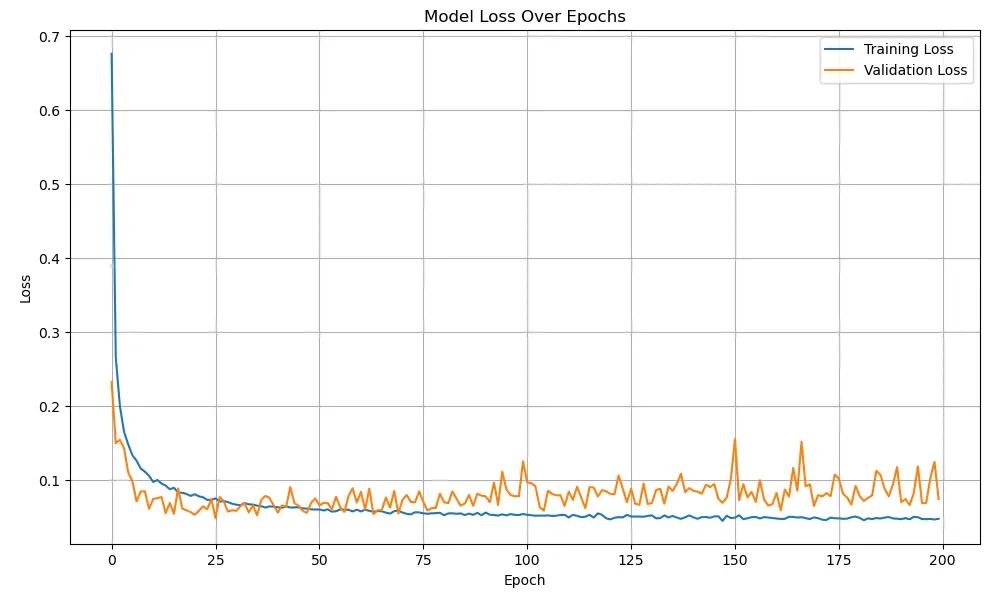
Experiment 3 Training Loss vs Epochs
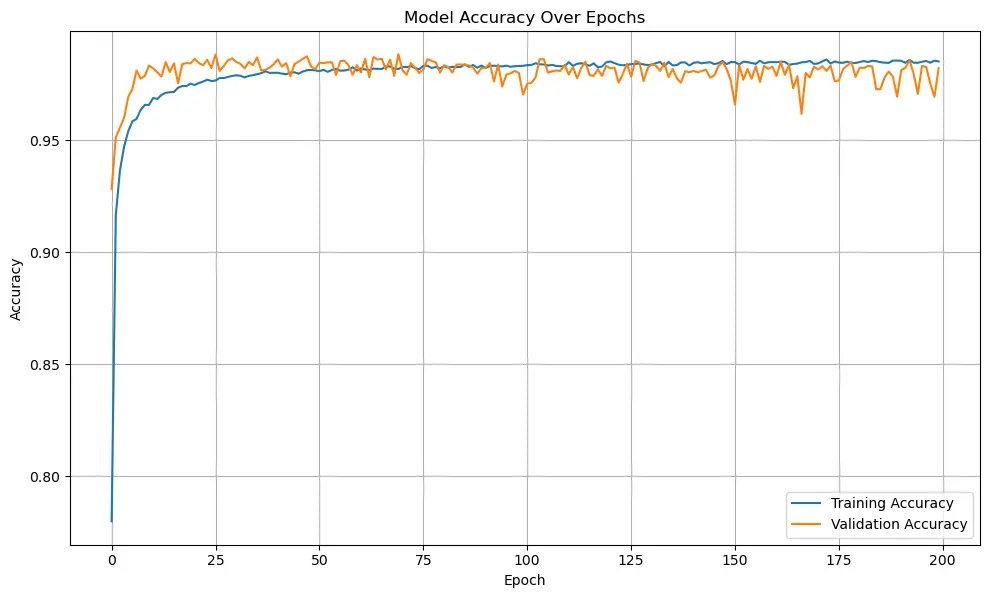
Experiment 3 Training Accuracy vs Epochs
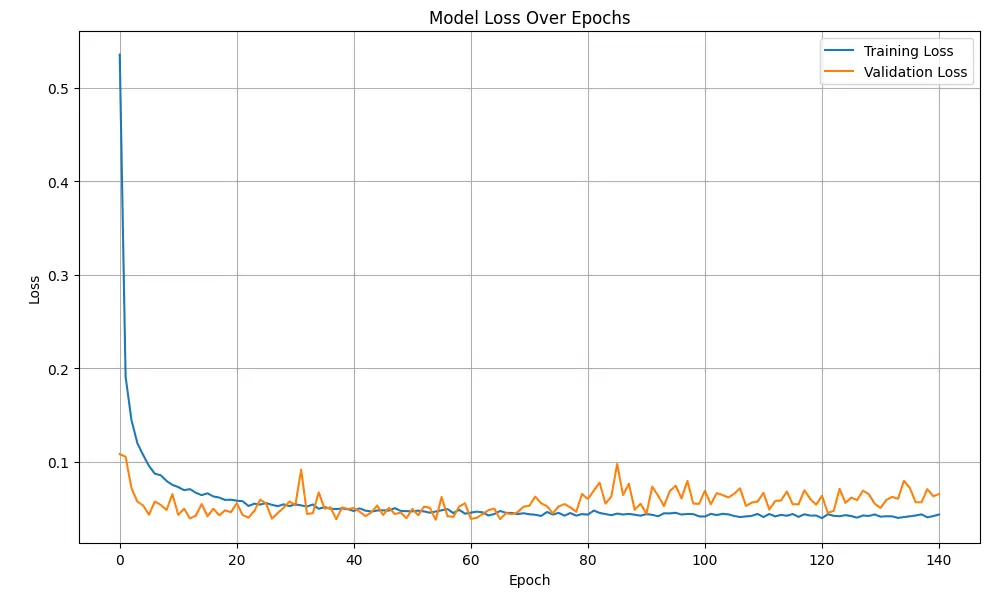
Experiment 4 Training Loss vs Epochs
Experiment 4 Training Accuracy vs Epochs
Mnist Digits Random Samples
Project Description
A project showcasing the full lifecycle of a deep learning model: building a custom CNN in TensorFlow, training it on an augmented MNIST dataset, and deploying it for instant, offline-capable inference in the browser.
Responsibilities
- Engineered an end-to-end digit recognition system by building a custom Convolutional Neural Network (CNN) from scratch using TensorFlow and Keras.
- Achieved over 99% accuracy and a 0.99 F1-score on the MNIST test set, outperforming or matching traditional ML model benchmarks through a superior, spatially-aware architecture.
- Designed and implemented an on-the-fly data augmentation pipeline directly into the model using Keras layers (RandomTranslation, Zoom, Rotation) to improve model robustness and generalization.
- Systematically managed the training process for over 200 epochs, using Keras Callbacks like ModelCheckpoint to save the best-performing models based on validation accuracy.
- Conducted a thorough analysis of training and validation learning curves (loss and accuracy) to diagnose model behavior, identify the optimal training duration, and prevent overfitting.
- Architected a deep network following modern design principles, including progressively increasing filter depth (8 -> 16 -> 32) while decreasing spatial dimensions with MaxPooling.
- Converted the final trained model to TensorFlow.js format for deployment, enabling high-performance, real-time inference directly in the browser for a fully client-side web application.
Related Links
Technology
PythonTensorFlowTensorFlow.js